Tuesday, September 05, 2006

Tom Nefyn: 'A Cup of Cold Water'

When I wrote my series on Tom Nefyn, I noted that the exact reasons for his return to the ministry of the Calvinistic Methodists were unclear. Since then, some digging in the archives has produced this marvellous letter, written to layman, former MP and invalid, John Herbert Lewis, an orthodox Calvinistic Methodist, and one who had agreed with the decision to suspend Nefyn. Make of it what you will:

Beehive
Coedpoeth
Wrexham
March 29 [1933]
My dear Sir Herbert Lewis,
‘A cup of cold water.’ At times, such a statement appears simple and commonplace, and the reaction it evokes in the heart is both weak and colourless. Its meaning depends on man’s circumstances; they make it trivial or vital. For in the valleys of Wales, where the silver streams babble and flow endlessly, it would probably lack all force and fascination. But in a distant desert-land! Its words would soon assume a character, essential and appealing; it would associate itself with man’s destiny. ‘A cup of cold water.’
And during the last three years and eight months I have walked across a bleak and lonely country, homeless and without a Church, desirous of reaching the City of Reconciliation but exposed to the chilly wind of misunderstanding. Sometimes the soul has felt inclined to yield – to yield to its own weakness and weariness, and to the suggestion of things. During these moments the Desert almost won its victory; hope frequently gave way to pessimism.
But suddenly and unexpectedly – ‘a cup of cold water’!! You, George Davies, Fearon Halliday, and four or five other men, gave me signs of loyalty, affection, understanding, sympathy, and fellowship, and the soul renewed its strength. And this water Christ always turns into wine; the cup also does He make into a Communion Cup.
At last I have crossed the bleak and lonely country, and the City of Reconciliation has been reached. For that is the true significance of the Rhoseomor Call and Reply. Before I enter, however, let me say – thank you very much for your cup of cold water in days of isolation and need. ‘A cup of cold water’! Out of such does God make the dew of the Heavens.

With a deep sense of gratitude and
My heart’s best wishes. Gwyn eich
Byd. Troisoch eich gwely clf yn
Orsedd Gras I eraill
Very sincerely
Tom Nefyn

Sir John Herbert Lewis died later that year. Did he do right in keeping the way open for Tom Nefyn's return, or did this send the signal that the church was not serious about its beliefs? In the final analysis, there seems to be a tension between Sir Herbert Lewis' Christian charity to the man, and an implicit endorsement of his theology.

Labels:

Friday, July 07, 2006

Tom Nefyn Williams: A Warning from History 11: Final thoughts

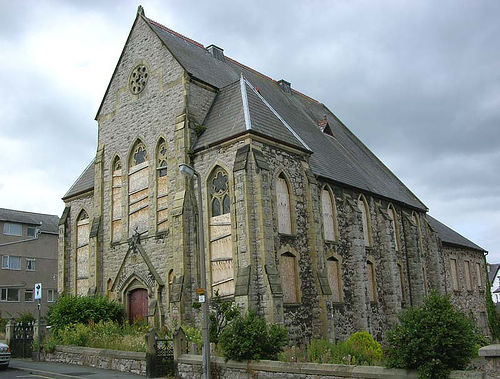
This final post on Tom Nefyn is illustrated with perhaps the most solemn sight in Wales today. A closed chapel. This one is in Colwyn Bay, but the image could be duplicated all over Wales. Tom Nefyn's case, which effectively embarrassed the Presbyterian Church of Wales (Calvinistic Methodists) into dropping all pretence at discipline. In my previous post, I examined the general lessons that may be learned from the case.

Tom Nefyn did not empty his chapel. In fact, his ministry at Ebenezer, Tumble, brought members back into the church. If we were to judge Tom Nefyn by results, we should, like his church, have to support him. This is another reason why our faith must be firmly grounded in doctrine.

However, while Nefyn's preaching was dramatic, and his social activism endeared him to many in the Tumble area, his broader ministry was less successful. This is best illustrated by the August 1928 'Keswick in Wales' Conference at Llandrindod Wells. The third encounter between the two men saw them scheduled opposite one another. Iain Murray describes a 'buzz' of excitement at Sunday Breakfast, Dr. Martyn Lloyd Jones was astonished to be told that: 'If we believed in betting, the people would be betting!'

The two men met and conversed politely before their respective preaching engagements. Tom Nefyn, preaching at the Albert Hall, preached an extreme liberal sermon before a large congregation, in which the former evangelist ridiculed both the deity of Christ and His resurrection. Lloyd Jones, preaching to an equally
large congregation, preached the old, old story. In the evening, the Albert Hall was half-empty, while the chapel in which Lloyd-Jones preached was packed to the rafters, even the pulpit stairs having to be pressed into service as extra seats!

Remembering this, the Carmarthenshire Presbytery, seeking to calm the situation after Tom Nefyn's excommunication, invited Dr. Martyn Lloyd-Jones to preach at a special meeting in Water-Street Church, Carmarthen on the last Thursday in September. For fifty-one years, this continued, with the same preacher. Among those affected by the preaching over these years was the Rev. Dafydd Morris, minister of the Evangelical Church in Carmarthen. Even in the darkest moments of the Church's history, God has his people and his prophets. One of the effects of the Tom Nefyn controversy is the Church in the old Presbyterian College, and its witness.

Further reading:
Gwyn Davies, A Light in the Land: Christianity in Wales 200-2000 (Bryntirion). Short, popular account.

Noel Gibbard: Taught to Serve: The History of Barry and Bryntirion Colleges (Bryntirion). This book describes the development of the work begun at Porth.

Iain H. Murray, D. Martyn Lloyd-Jones: The First Forty Years (Banner of Truth). This contains an excellent account of Welsh Calvinistic Methodism between the wars I have read.

D. Densil Morgan, The Span of the Cross: Christian Religion and Society in Wales 1914-2000 (University of Wales Press). The fullest modern account of the Tom Nefyn Controversy is to be found on pp.122-8. Sadly, this book is written from an explicitly anti-evangelical viewpoint.

Robert Pope, Building Jerusalem: Nonconformity, Labour and the Social Question in Wales, 1906-1939 (University of Wales). Tom Nefyn is featured prominently in this book.

Robert Pope, Seeking God's Kingdom: The Nonconformist Social Gospel in Wales 1906-1939 (University of Wales Press). Similar to the above, equally, this book is more sympathetic than Densil Morgan.

Labels:

Thursday, July 06, 2006

Tom Nefyn Williams: A Warning from History 10: Closing thoughts

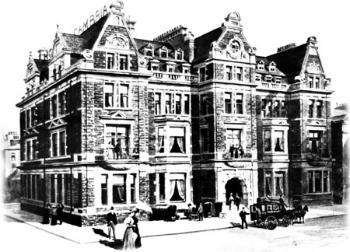
We shall end where we began, in a room in the former United Theological College, looking out on the sea. The College closed in 2002, and is now offices and accomodation. What happened is part of the Tom Nefyn story. It is now my intention to draw some conclusions:

1. Simply because a man proves to be a good preacher does not mean that he is immune to the effects of liberalism. Tom Nefyn remained to the end a powerful preacher, but had become simply a 'dramatic reciter', to quote Iain Murray. Even his attendance at Porth had not armed Nefyn against the effects of liberal professors.

2. The effect of liberal theological teaching can be far in excess of the liberalism of the lecturers. Tom Nefyn, as we have seen, came to hold doctrines that shocked even his lecturers. Taught to view the Bible as no more than a human document, Nefyn spilled into out-and-out Socinianism, despite the fact that his teachers stopped short (Equally, we must admit that others can pass through liberal colleges and seminaries without bad effects, such as William Vernon Higham, former Minister of Heath Church, Cardiff).

3. Attempts to enforce Church discipline against heretical teachers will always be portrayed as an 'inquisition' by the world. The Presbyterian Church of Wales, a denomination with a confession of faith, was perfectly within its rights to discipline Tom Nefyn, whatever the opinion of his church. He was not an Independent, unlike his most prominent defender, John Morgan Jones. Had Tom Nefyn wanted to minister in a Church with loose doctrine, as we have seen, he could have.

4. In Church discipline of heretical teachers, the church involved must show backbone. The controversy over Tom Nefyn left the church so traumatised that no further stand over heresy would be taken. The descent of the Presbyterian Church from Calvinism to rationalism was slowed, it was not ended.

5. Either denominations must exercise discipline firmly, or doom themselves to become rationalist sects.

Labels:

Wednesday, July 05, 2006

Tom Nefyn Williams: A Warning from History 9: The end of the Road

The Tumble congregation had decided to face down the Presbyterian Church, declaring that they had the right to entertain a minister who disagreed with the standards of their denomination. Having seen Tom Nefyn given every chance to recant had not softened their attitude. Whatever they expected, it was not what actually happened. The local Presbtery met on 2 October 1929 and voted to dissolve the church at Tumble. When they arrived at their chapel on Sunday 7 October, the congregation found themselves locked out. The presbytery officials told them that they had all been excommunicated. Only those willing to give their personal assent to the Confession of Faith and the rules of the Denomination would be allowed back.

The congregation refused, instead purchasing land for a new meeting house. The building would become Llain y Delyn, home to the 'Tumble Christian Fellowship,' a non-denominational congregation without a Confession of Faith, where the only standard would be the commitment to a 'quest' for truth. Naturally, the congregation's first choice for minister was their exiled hero, Tom Nefyn, who had returned to his native Caernarfonshire with his wife.

Much to the dismay of his former flock, Nefyn refused. In March 1931, he was received back into the Presbyterian Church of Wales. A year later, he was reinstated in the ministry. For the rest of his life, Tom Nefyn would fulfil an obscure pastoral ministry in rural North Wales. His former flock could only view his progress with bitter disillusionment, while for the Presbyterian Church, the experience proved so traumatic that they would never try a minister for heresy again.

We shall conclude tomorrow with a few final thoughts on what may be learned from this unhappy episode.

Labels:

Tuesday, July 04, 2006

Tom Nefyn Williams: A Warning From History 8: Coming to Judgement

Tom Nefyn's response to Treherbert was to offer his resignation to the congregation at Ebenezer, Tumble. In his letter, he took a truculent tone, declaring: "It is evident that antiquated theological forms are considered more important than a forward-looking humanity." The congregation refused to accept his resignation and resolved to stand by him. John Morgan Jones, Principal of the Independent (Congregationalist) Bala-Bangor College, editor of the Student CHristian Movement Magazine Yr Efrydydd, attacked the Presbyterians for 'persecuting' Williams.

At the Nantegaredig Association, Tom Nefyn was belligerent. Asked by the Moderator, Peter Hughes Griffiths whether he accepted the standards of the Presbyterian Church, Williams asked exactly what those standards were. Hughes Griffiths ignored him, assuming that Nefyn should have read them, and repeated the Treherbert decision, requiring William to resign from the Presbyterian Ministry if he no longer agreed with the creeds. Tom Nefyn replied that he repudiated the decision and would not willingly resign.

Owen Prys stepped in to seal the doom of his former student. He moved a resolution to suspend Nefyn from the ministry, which passed almost unanimously. Tom Nefyn was to leave Tumble by 9 September, 1929.

On his return to Tumble, Nefyn was treated like a martyr. He was offered pastorates where he would be free to hold his heterodox opinions, but decided to remain in the Presbyterian Church. His congregation supported him, the five remaining elders and 215 members resolving that "the attitude of the Association toward Tom Nefyn will decide the attitude of the undersigned towards Welsh [Calvinistic] Methodism."

What would that attitude be?

Labels:

Monday, July 03, 2006

Tom Nefyn Williams: A Warning from History 7: The Relucant Battle Line

As he read Tom Nefyn's personal account of his beliefs, Owen Prys despaired. But he had a job to do. After compiling his report, listing the heresies contained in Y Ffordd yr Edrychaf ar Bethau, he presented it to the Treherbert Association (meeting) of the Presbyterian Church of Wales.

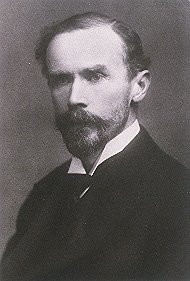
The report concluded that Tom Nefyn's beliefs were: 'fundamentally opposed to the standards of our Connexion and to the historical faith of the Christian Church.' Modernists and liberals across the denominations had protested that it was 'persecution' to expect a minister to abide by the standards of the Presbyterian Church of Wales. Sir John Herbert Lewis (pictured), former MP, Government Minister, and prominent Calvinistic Methodist layman, however, had assured Prys that the majority of informed members of the Presbyterian Church were with the Connexion's authorities 'the Corff'. Owen Prys was very grateful, declaring that:
'I never undertook a more difficult task. On the one hand I have a thorough
dislike of anything like a heresy-hunt, and along with that I have a very kindly
feeling towards Tom and expected much from him. But unfortunately he put the
sasiwn [Association] in a corner by insisting that he should be judged by his
declaration, which is far more extreme than he realises, I feel sure. I have no
sympathy with fundamentalism, but this mixture of Unitarianism, Pantheism and
rationalism would deprive us of a Gospel altogether.'

Tom Nefyn was given a year in which to mend his ways or resign from his charge. By the time of the Nantgaredig Association ofAugust 1929 (Morgan's date, Robert Pope gives it as 1928), it had become clear, however, that Tom Nefyn had no intention of doing either. Although Owen Prys had not desired it, a battle for the Gospel was about to be fought. But would the trumpet give a certain sound?

Labels:

Saturday, July 01, 2006

Tom Nefyn Williams: A Warning from History 6: A matter of Principle

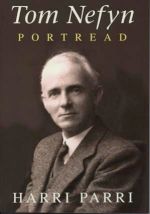
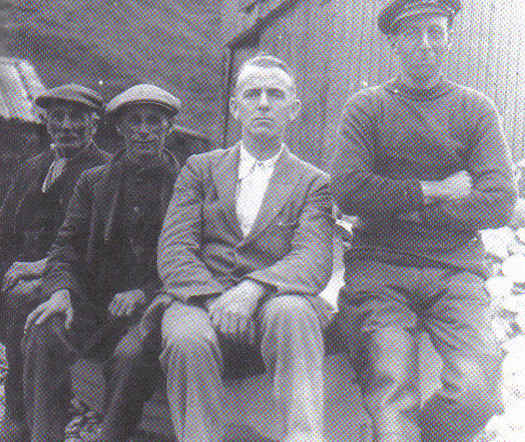
The Presbyterian Church was careful to show fairness to the accused minister. After all, the complainants were elders who had resigned from his Church. Accordingly, the man charged with investigating Tom Nefyn (pictured later in life) was Dr. Owen Prys, Principal of the Theological College at Aberystwyth, a man personally familiar with, and sympathetic to, the accused. Prys suggested that Tom Nefyn take a Sabbatical in order to consider the Church's Confession of Faith, believing that 'Nefyn' would accept the substance of the confession, even if he could not accept every jot and tittle.

Tom Nefyn refused, and in October, 1927, he write a letter to the London Association, where, as we have seen, he preached at the ordination of Dr. Lloyd-Jones, demanding that he be tried on the content of his belief. To help the authorities, he included a forty-page booklet called Y Ffordd yr Edrychaf ar Bethau ('The Way I Look at Things'). Most of this was taken up with an exposition of doctrine. This demonstrated that he was an advanced modernist.

While Tom Nefyn would adopt the air of a martyr, the contents of this document demonstrated beyond all doubt that he was completely at odds with the Confession of Faith. In his view, God was immanent in the world, being defined impersonally as the 'great spirit that seeks to realise itself in the expression and life of the world' [p.11], 'Creative Mind' and 'Eternal Mind', the force that energised the evolutionary spirit.

The Trinity was rejected on the grounds that: 'To speak of three Persons in the Godhead means sacrificing true unity'. The supernatural element was dismissed as a mere fancy, Christ's miracles being allegorised out of existence on the grounds of modern 'science.'

On the Incarnation, Tom Nefyn denied almost everything. Christ was to be considered divine only in terms of his knowledge of the divine spark 9ideal humanity) inside every man, a knowledge he shared with other 'teachers.' The atonement was to be understood solely in terms of moral influence [p.17], and the resurrection was the disciples' "early method of declaring the victory and lasting value of Christ's personality, ... it was a Jewish way of emphasising the conquest of life and goodness of Jesus over sin and destruction."

Reading this, Owen Prys' heart fell. There could be no doubt that his former student was guilty as charged.

Labels:

Tom Nefyn Williams: A Warning from History 5: A liberal Ministry

Tumble is located in the Gwendraeth valley of eastern Carmarthenshire, on the edge of the South Wales coalfield. It was here that Tom Nefyn arrived in 1925, being formally inducted in 1926. At this time, 'Nefyn' was a left-leaning preacher, still possessed of the dramatic preaching style of his itinerant, evangelical days.

He enjoyed some notable success in his early months, winning the respect of his flock and the community. Such was his appeal that Tom Nefyn was able to bring back into the Church a number of young men who had left Chapel for left-wing politics. This was not due to Gospel preaching, however, but his preaching of Socialism from the pulpit.

His left-wing politics and preaching of the 'Social Gospel', especially during the period of the General Strike of 1926, increased the new minister's popularity. His main focus was not the care of souls, but the care of bodies. Tom Nefyn campaigned fervently against slum housing, doing a thorough survey of the housing belonging to the Coal Company in Tumble and sending his findings to the management. Asked whether such campaigning was appropriate work for a ministry, Tom Nefyn replied '[...] that the building of an impressive Chapel to worship God while the worshippers lived in slum condidtions was nothing but 'empty worship.' (Robert Pope, Building Jerusalem (1998), p.209). But Tom Nefyn was not simply a political preacher. When offered the Labour Party nomination for Cardiganshire, he turned it down. Rather, he believed that Gospel work was practical work. To allow him to speak in his own words:

"... devotion without responsiblity is not enough; prayer without work is not
enough; the Father's satisfaction on the Mount of Transfiguration is not enough
without satisfying the father of the epileptic boy on the plain."


Swift recourse to the Bible reveals that Tom Nefyn's exposition to be troubling, committed to naturalistic philosophy (the boy was demon-possessed, according to Christ), and distorting the passage (Jesus rebuked his disciples for their unbelief, and in Mark's Gospel states that Prayer and fasting were necessary to expel the demon). In an address to the London Association in October 1927, in which Dr. Martyn Lloyd-Jones was ordained, Tom Nefyn spoke of Christ as an ideal which all men should seek to follow in order to live a fulfilled life.

By this time, there was disquiet in the Presbyterian Church of Wales over Tom Nefyn, indeed, he was under investigation. Four elders had resigned over his unorthodox style of worship, commitment to left-wing politics, and his theology. The complaints were referred to the South Wales Association in June 1927.

We shall see, next time, what the investigation revealed. and I warn you, it wasn't pretty.

Labels:

Friday, June 30, 2006

Tom Nefyn Williams: A Warning from History 4: Broken Cisterns

As we have seen, despite his time at Porth Bible School, Tom Nefyn was required to pass through the denominational colleges of the Presbyterian Church of Wales before he could be considered for a pastorate. By the time of his arrival in the early 1920s, the two colleges he attended, Aberystwyth Theological College (not to be confused with University College, my alma mater), and Bala, the senior college, were both hotbeds of Modernism. There, he would have imbibed the latest Higher Critical theories about the Bible, new psychological theories, and the Social Gospel.

In many ways, this should not have been surprising. By the 1890s, there was no place for truth in the theological colleges. Thomas Charles Edwards, son of the first Principal of Bala, first Principal of the University College at Aberystwyth, had in 1888 lamented the decline of theological knowledge among the laymen and the theologians of the Calvinistic Methodists. The Calvinism of John Jenkins, Hengoed, Charles Hodge and Shedd had been jettisoned in favour of a weak Arminianism mixed with the evolutionary theology of Henry Drummond. The key figure had been Andrew Martin Fairbain, Principal of Mansfield College, Oxford, the author of the theological curriculum of the University of Wales.

Fairbain's key text was The Place of Christ in Modern Theology (1893), which portrayed Christ as the pinnacle of Human evolution, the inspiration of the cry, 'back to Christ!' Even Thomas Charles Edwards was affected, his 1895 lecture, The God-Man (1895, English and Welsh) endorsing this view, and declaring that the incarnation would have been necessary, even without the Fall: "Exclude the Representative Man from nature," he stated, "the Son of God from creation, and the Universe has no ethical end and teleological purpose." [p.94] In addition, he had advocated a radical kenoticism in regard to the incarnation [p.104]. By Tom Nefyn's time, the truth had declined further.

Listening to such radical modernism from men with high-sounding titles and many degrees and publications, the young fundamentalist found that Porth had not equipped him to cope. Whatever resistance he may at first have manifested, Tom Nefyn drank deeply at the wells of modernism. By the time he was inducted to the ministerial Charge of Ebenezer, Tumble, in East Carmarthenshire, Tom Nefyn had become conformed to the modernist spirit of the age.

Part five will look at Tom Nefyn's ministry.

Labels:

Thursday, June 29, 2006

Tom Nefyn Williams: A Warning from History 3. The School of the Prophets


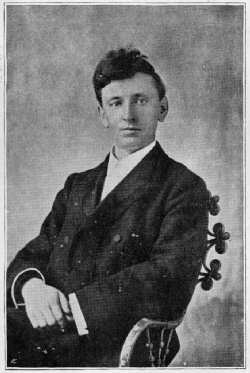
Porth Bible School was the brain-child of R. B. Jones (pictured), a fundamentalist Baptist minister who had been awakened in the 1904-5 Welsh Revival. Like Tom Nefyn, R. B. Jones had a burden for the evangelisation of Wales. Because of the impact of the Higher Criticism in the colleges and denominational seminaries, and the older influence of Hegelianism, R. B. Jones had founded his Bible School in 1919, to train missionaries and evangelists without introducing the fatal leaven of modernism.

The school was fairly small, students paying £1.1s.0d. a term. The curriculum was a practical one, aimed at preparing workers for service outside of the ordained ministry. Particular emphasis was placed on preparing educators, in line with the mission ethos of the school.

R. B. Jones was heavily infuenced by American fundamentalism, inviting J. Gresham Machen to address his Church at Porth. A dispensationalist and premillenialist, Jones could almost have been transplanted from the United States. In his stand against error, whatever his theological distictives, Jones stands as one of the forerunners of the Evangelical Movement of Wales.

However, Tom Nefyn felt called to the Ministry of his own demonination, the Calvinistic Methodist Connexion, at this time becoming more usually known as the Presbyterian Church of Wales. The denominational leaders had left the Calvinism of their confession in the late nineteenth century to such an extent that, when questioned by Lord Hugh Cecil of the Disestablishment Commission, John Owen Thomas, one of these leaders, proved unable to name the five points of Calvinism, despite calling himself a Calvinist. When the points were explained by Cecil, Thomas had to admit he was not in agreement with a single one of them.

It was to the theological colleges of this denomination, first Aberystwyth, then the senior college of the Calvinistic Methodists at Bala, that the young fundamentalist evangelist now went.

Labels:

Wednesday, June 28, 2006

Tom Nefyn Williams: A Warning from History 2: 'Preach Him to All.'

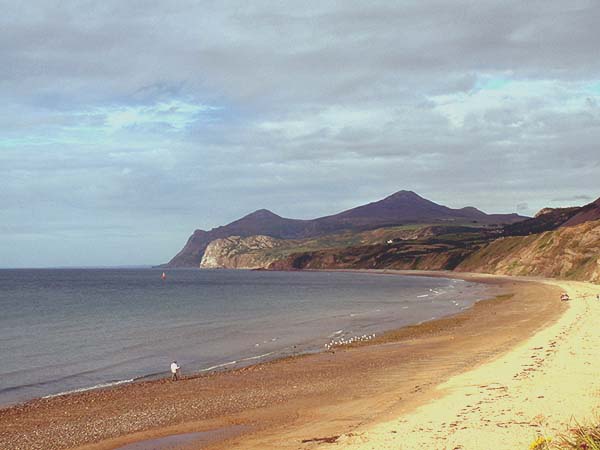
This will not be a biography of Tom Nefyn, but a description of his role in Welsh theology. However, we shall begin with a brief introduction of the man. He was born in 1895 on the Lleyn peninsular (depicted) of Caernarfonshire, North Wales, the most Welsh part of the most Welsh county in Wales. The turning point of his life came about twenty years later, however.

Tom Nefyn, like many young men of his generation, would look back on the Great War of 1914-18. He served on the Western Front and the Dardanelles (Galipolli), and it was in this period that he professed evangelical conversion. The returning soldier decided to enrol for another tour of duty, this time as a soldier in the army of King Jesus. Tom Nefyn became filled with a burning desire to preach the Gospel. Soon, his voice, poetic and eloquent, could be heard preaching in the open air at country fairs.

Oh, what a delight it must have been in those early days, to 'Preach Him to all'! To be in the front line of the battle to revive the Church, badly hit by the Great War, which had not only emptied Sunday Schools, but split churches over the commitment (or otherwise) to the War effort. If Tom Nefyn was to move from an open-air ministry to pastoring a church, however, he would have to undergo theological training.

As a first step, Tom Nefyn enrolled at the Bible School, Porth, a small fundamentalist college in the Rhondda, the heart of the South Wales Coalfield.

Labels:

Tuesday, June 27, 2006

Tom Nefyn Williams: A Warning from History 1.


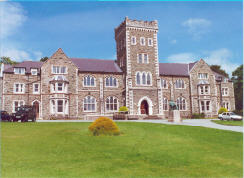
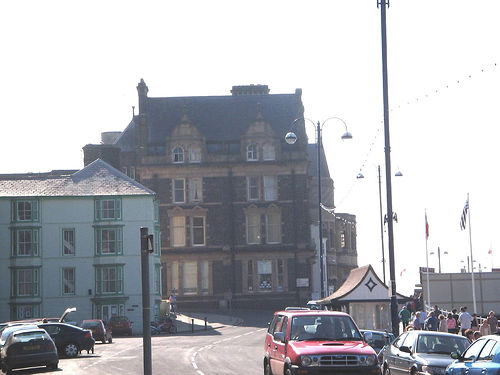
Last week, I was staying in Aberystwyth to do some research on the Tom Ellis and D.A. Thomas Papers. I stayed in a large building on the promenade, formerly the United Theological College of the Presbyterian Church of Wales. This Church, formerly the Calvinistic Methodist Church. It was the first time in all my visits to Aberystwyth that I had a view of the sea. As I sat in the little room, I felt an overwhelming feeling of 'hiraeth', of longing. So I walked in the hills and thought of the world within a world that is 'Aber'. And I began to think of those students who had sat in that room, prayed and read their Bibles, as I was doing. And the coldness which had closed this once-fine institution.

Not to mention one of the college's most infamous students. Tom "Nefyn" Williams. It is his case that I intend, God willing, to address. A sad case of what havoc a liberal theological college can wreak. The series starts tomorrow, and I ask every reader to pray for Wales as they read it.

Labels: