Wednesday, February 21, 2007

D. R. Davies XXIV: Closing Thoughts

And so, we come to the end of D. R. Davies' life, and to the end of a series which at one point I thought I would never finish. In the eyes of some, I have described the journey of a man from nonconformity to Anglicanism, at the same time as I undertook the last step away from the Church of England, and for the same reason as Davies left Congregationalism; the realisation that the Glory has departed. I have found telling his story challenging in the extreme, as it has exposed areas of pride and hypocrisy in my own life. But part of the Christian life is realising our own corruption and sin.

Davies was not an evangelical, nor did he pretend to be, at least not after his psychological conversion in 1905 had evaporated. I am inclined to accept his own testimony, that he was converted that day at Southerndown, when 'he came to the end of himself.' That said, although Davies saw his journey as one: 'on to Orthodoxy,' he never reached that Orthodoxy. Like C. S. Lewis, he never understood evangelicalism, although he saw its attraction. His heart had been wounded too many times. And yet, although never evangelical, he was not, at the end of his life, what he once was. Understanding that Man cannot recover himself without God acting, that man's nature is radically corrupt, Davies was not far from evangelicalism.

His beliefs about politics and philosophy were retained from his days as a liberal, a part of remaining sin in his heart. Yet Davies did reject the liberal belief that the kingdom of God could be realised politically. In the final analysis, Dr. Martyn Lloyd-Jones was correct to state that Davies' greatest worth is his negative experience of liberalism, that he demonstrates the heartbreak of liberalism, as I said a very long time ago. Was Davies converted? In the end, only God knows a man's heart, but we should remember that we are saved by grace through faith, and not by dotting every theological 'i' and crossing every doctrinal 't.'

Labels:

Tuesday, February 20, 2007

D. R. Davies XXIII: Last Years

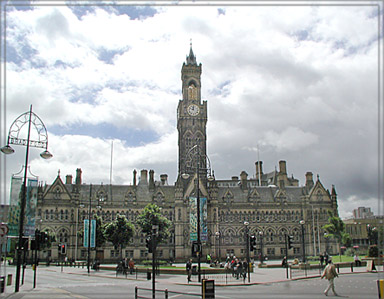
D. R. Davies was not one to stay in a post for long, and after four and a half years at the centre of things in London, Davies decided that he wanted to move out into the country (which had been his plan when he entered the Church of England). When the Bishop of Chichester offered Davies the living of Holy Trinity church, Brighton (pictured, and you can see where a building used to be), a large preaching church without parish duties, Davies jumped at the chance. He published a book of sermons preached at this church, Thirty Minutes to Raise the Dead. Despite the care he took over these sermons, and the fact that the congregation grew during his incumbency, Davies felt his ministry there a failure. He fely little liberty in preaching, although he was granted liberty elsewhere.

While at Holy Trinity, Brighton, Davies continued his journalistic activities, producing an insert for parish magazines called 'Christian Renewal.' In association with Selwyn Gummer, he started Pulpit Monthly, a publication designed to raise the quality of preaching. Still foremost in Davies' preaching was the depravity of Man, or, as he called it 'Radical Sin.'
After two and a half unforgiving years at All Saints, Brighton, Davies took the opportunity to move to St. Mary Magdalen, St. Leonards-on-Sea. Once more, he was required to do parish work. And Davies, a man who had once hated pastoral visitation found that these duties leant him new life and insight. And his preaching, far from suffering, gained a new lease of life. His writing did not suffer, and Davies spent nine happy years (the longest he ever stayed in a church) there. Only his advancing years drew Davies away from that church.
At the end of his life, Davies was appointed to the united parish of Parham and Wiggonholt cum Greatham, a small rural parish possessed of three churches. It was there that he died in 1958. Among the last words he wrote were a summary of his life:
"Were this the story of merely one isolated human individual, it would not have been worth the telling. Rightly or wrongly, I am persuaded that my story is the microcosm of a generation. Here on the smaller scale of an individual existence can be studied the history of an era - except, at present, for the conclusion. I experienced in my soul the bitter death of the illusions of the generation into which I was born, and lost myself in those illusions. But after that death I rose again, for I found myself in finding God. What I was searching for was my own identity, and without knowing it my search was for God. I had to give up myself exactly as I was, the the chaos and disillusion into which I had fallen, to find Him. I found Him and became a new man."
Next time, God willing, I shall sum up Davies' significance, trying to place him in his context.

Labels:

Saturday, February 17, 2007

D. R. Davies XII: D. R. and the Doctor

It was during his time in West Dulwich that Davies was invited to speak at the Theological Students' Conference, an event organised by the evangelical Inter-Varsity Fellowship, held at Cambridge University in 1945. Davies spoke on 'Christianity and Civilization.' In the course of the address, Davies repeated his argument that the only way that the Church could reach modern man was to study politics and social affairs in order to meet the intellectual humanists on their own ground.

At the end of the address, the former president of the IVF and chairman of the conference, Dr. Martyn Lloyd-Jones rose to ask his fellow-countryman some questions. The exchange between the two men lasted about ninety minutes, delighting the delegates.

Lloyd Jones later recalled his argument:

"I was saying it was the exact opposite. I pointed out how D.L Moody had appealed to the aristocracy in this country - the common people to a point, but noticeably to the aristocrats - and how John Wesley was more successful among miners than he was in Oxford. My argument was that Davies was quite wrong psychologically and that Harold Laski was more likely to be converted by a Salvation Army speaker than by D. R. Davies. Psychologically people do not like to be proved that they are wrong, and more than that, generally, if people become Christians they capitulate completely. In their conversion there is an emotional element rather than an intellectual one: in other words, they stop 'reasoning' and surrender and abandon themselves to Christ."
And Davies should have known this, after all, he had been converted not by debate, nor by clever arguments, but had surrendered to God after years of kicking against the goads. He never addressed the IVF again.
Summarised, the difference between Davies and Lloyd-Jones was that D. R. Davies believed that the core weakness of the Church was that she had an insufficent knowledge of the world. Lloyd-Jones, on the other hand, believed that the Church's problem was an insufficient knowledge of God and the experience of His power.

Labels:

Friday, February 16, 2007

D. R. Davies XXI: Hull to London

D. R. Davies was appointed Curate to Canon A. E. Glover at St. John's Newland, Hull. It was still wartime, and Hull, as a major port, suffered terribly. Canon Glover allowed his well-known curate to preach as often as he liked, as well as teaching Davies the duties of a curate. St. John's was (and still is) an evangelical church, so we can only assume that Davies was kept on the path of orthodoxy.

In spite of the pressures of wartime and the duties of his office, Davies found time to write and read. He wrote several books, including The Two Humanities, and Secular Illusion or Christian Realism? books that stressed the fallen nature of man and the necessity of redemption through Christ. In addition, he began a regular column in the Record, a Church of England newspaper. Initially published as 'The Watch-Tower,' its name was changed to 'D.R.D's Column' when the identity of its author became known.

On the retirement of Canon Glover, Davies took the post of acting vicar until the Rev. Frank Ford was appointed the living. A clever man, possessed of a clever wife, Rev and Mrs. Ford became firm friends of the Davies'. In contrast to Davies' ministries at Ravensthorpe and Southport, this was a time of friendship and new opportunities. Still, Davies was looking to move on to his own church, preferrably in London. When he was offered the living of Emmanuel, West Dulwich, Davies jumped at the opportunity.

Davies had long yearned to become a famous London preacher, and with his appointment to Emmanuel, this ambition was realised. In his memoirs, written towards the end of his life, however, Davies skips over this period in a few lines. Apparently, this no longer mattered to Davies, what mattered was that he was asked to preach, or rather the gospel he was asked to preach. Many evangelicals had come to view Davies as a 'prophet for the times.' For one notable Evangelical, however, Davies was not a prophet, but a crooked signpost, pointing the wrong way.

Labels:

Thursday, February 15, 2007

D. R. Davies XX: On to Anglicanism

As his year at Richmond Road, Cardiff, came to an end, Davies had decided that he would leave the Congregational Church. Initially he had considered the Methodists or the English Presbyterian Church, but a conversation with Bishop Walter Carey convinced his that the Church of England could meet Davies' every need. Most appealing was the connexional structure of the Anglican Church. What problems Davies did have with the Church of England were adressed by Archbishop Temple, who advised Davies to pay a visit to the Gladstone Library at St. Deiniol's Library, Hawarden and meet the Rev. Alec Vidler, the librarian.

It was June 1940 when Davies paid the visit. He attended Matins at the library chapel. It was as if he had come home. Davies stayed up late into the night reading The Book of Common Prayer. Davies, who had experienced much trouble in extempore prayer, was impressed by the book's language and theology. A second visit to the library in October only served to confirm the decision. He was confirmed, and began a book on the prayer-book's General Confession, which was later published as Down Peacock's Feathers. He found the Confession thrilling in its truth, describing it as: 'a magnificent sledge-hammer.' In the book, Davies described the unity of mankind in corruption and stresed that only God has the power to rescue man from his predicament. It is clear from the book that it was written by a former Socialist, but it is a useful book, nevertheless.
When he spoke with Vidler about the possiblity of ordination, Vidler told the Archbishop that Davies was now a whole-hearted believer in the Thirty-nine Articles.
In Lent 1941, Davies was ordained deacon by Archbishop Temple in York Minster. A year later, Davies was given his priest's orders.

Labels:

Wednesday, February 14, 2007

D. R. Davies XIX: Back to the Ministry

Following the success of On to Orthodoxy, Davies was flooded with invitations to preach, write and lecture. Given his new celebrity, his return to the ministry was no longer a problem. He became minister of Richmond Road Congregational Church, Cardiff (pictured) in December 1939. It was agreed he would stay for one year.

The Congregationalism Davies found himself in was very different from that he had known ten years before:

"There was a colder spiritual climate. To a much greater extent in previous years, there was a greater strangeness to fundamental Christian experience." At meetings of ministerial colleagues, Davies found his emphasis on the sinfulness of man opposed by his older colleagues, while younger men found him a breath of fresh air.

The church was more worried about money, which was increasingly tight, rather than the saving of souls. Perhaps this was reflected in the fact that congregations were, as a rule, smaller than the membership, in contrast to the way things had been a generation ago. The state of the mid-week prayer-meetings was even worse. 'Ichabod' could have been written over the doors of many of the churches, even a great number of the more famous ones, for the glory had departed from Welsh Independency.

Still, Davies was a driven man:
"I found my work in Cardiff of absorbing interest, both preaching and writing, for which I enjoyed ever widening opportunity. I thought of myself first and foremost as a preacher; for God had called me to preach."
The pastoral visitation aspect remained a difficulty for Davies. While he would do the neccessary things, Davies felt worn down by having to do everything himself. He told his friend, Dr. J. D. Jones that he felt he must leave the ministry unless he could find a church that expected their minister to be first and foremost a preacher, only to have Jones tell him that he doubted such a church existed in Congregationalism. Dr. Berry, another friend laughed when Davies suggested he might be suited to a country pastorate, telling him that the Church of England had a monoploy of these.
The thought of leaving nonconfromity for Anglicanism had not previously occured to Davies, but it soon began to suggest itself strongly.

Labels:

Tuesday, February 13, 2007

D. R. Davies XVIII: 'On To Orthodoxy'

D. R. Davies had written one book before On To Orthodoxy. That book had not even found a publisher. Davies expected that On To Orthodoxy would be still-born, especially in the context of the outbreak of war. Yet the press welcomed it with open arms. Of nearly forty reviews, only, by Dr. Selbie in the Congregational Quarterly, was unfavourable, and that provoked an angry reaction from many readers. Dr. Martyn Lloyd-Jones, writing in The Christian World, praised the book:

"The utter futility of all that has so often passed as gospel during the past hundred yearsb is made terribly and tragically clear. Surely this is what is needed above all else at the present time. And especially, first and foremost, in the Churches. That complacent optimistic view of man and his nature that has so long controlled and directed thought and preaching must be given up, and must be replaced by the tragic view which is taught everywhere in the Bible."
Among the letters Davies received was from a missionary in Africa whose ministry had been re-awakened by reading the book.
However, it would be wrong to state that Davies, in spite of the title of his book, had become orthodox in the sense of evangelicalism. Indeed, in On to Orthodoxy, Davies was very careful to deny that he was a 'Fundamentalist,' although he felt that if the choice was between 'fundamentalism' and liberalism he would choose fundamentalism as being truer to man. Lloyd-Jones, writing to his wife about On to Orthodoxy was unsure of Davies' salvation: "He, like Brunner and Barth falls short of the real thing. I feel he has had some kind of 'intellectual conversion' and nothing more. And yet - on the negative side he is excellent."
The mention of Emil Brunner and Karl Barth says much. Had the book been entitled On to neo-Orthodoxy, the title would have been more apposite. Davies was a part of the Neo-Orthodox reaction against liberalism within Welsh Congregationalism, with Professor J. E. Daniel of Bala-Bangor College and Vernon Lewis of Memorial College, Brecon. Realising the futility of liberalism, these men stopped short of the truth. The result was that when young men attended these colleges after the war, they found no evangelical witness there.

Labels:

Saturday, February 10, 2007

D. R. Davies XVII: 'He Arose and Went to His Father'

Davies himself observed that: 'It would be very romantic if I could say that from that moment on Southerndown beach, all was clear and straightforward and ecstatic.' And, if his story had been a work of fiction, our last chapter would have been the end. But human lives are lived until the Lord calls us away, whether to judgement or to Glory. Davies returned to London, knowing that he had passed from death to life. His relationship with his wife revived; in Davies' words, "we fell in love again." And Davies also fell in love with the Bible, devouring the prphets, the psalms, John's Gospel, the Epistles and Revelation. Now these words made perfect sense to Davies. He saw them as he had never seen before.

And now he felt the need to worship the God who had so loved him. He returned to the church, worshipping at Lyndhurst Road Congregational Church, London (pictured), under the ministry of Dr. John Short. In addition, he attended on the ministry of Dr. Martyn Lloyd-Jones, newly-arrived at Westminster Chapel. Through the agency of Malcolm Spencer, a high official in the Congregational Union, Davies was able to return to the ministry, taking a temporary Pastorate at Tonypandy in the Rhondda for April 1938.
Davies found preaching the Gospel was now a joy, 'the Gospel once for all delivered unto the saints,' was now his theme, not whatever fad of the moment was exciting the world. This month at Tonypandy convinced Davies that the call to preach was genuine, although for the present, there was no post for him.
So it was back to the lecture-circuit, this time in the service of a new master. And he decided to write a book about original sin. This book turned out to be more autobiographical, and Davies decided to re-title it 'A Modernist's Rediscovery of Orthodoxy.'

It was in conversation with Lloyd-Jones about an article he had written on the same subject that Davies mentioned his book. Lloyd-Jones put him in contact with Hodder and Stoughton, who accepted the proposal. Mr. Paul Hodder-Williams, the publisher, suggested a snappier title would help sales. He suggested 'Back to Orthodoxy.' Davies, feeling that this suggested Orthodoxy was a retrograde step, changed this to On To Orthodoxy.

The book was published in September 1939, as the war-clouds gathered over Europe; when modernism's promise seemed totally unfulfilled. The book seemed very much a tome for the times.

Labels:

Friday, February 09, 2007

D. R. Davies XVI: 'And He Came to the End of Himself'

The trip to Southerndown was meant to refresh Davies. It failed, there, as he walked over the glowering cliffs, he could not help but remember his previous visit, before he departed to United College, Bradford. The exhausted Davies looked back and saw only failure. His marriage was all but over, only the fidelity of his wife staving off collapse. He spent time alone at Southerndown, leaving his wife to look after their child, while he wandered over the cliffs and fields.

It was on one of these days, as the rain beat against his face, a sudden desire to end it all entered Davies' mind. With the sea below him, and the night closing in, Davies was in the ideal position to act on this desire. He descended to the beach and plunged into the surf.

"I must have swum, though I am a poor swimmer. Then in a flash, a thunderous flash, I realised what I was doing. "Good God! What am I doing?" With despairing strength, I swam back. Oh that struggle! I was suspended between life and death!"

D. R. Davies suddenly remembered his childhood, his mother teaching him a childrens' catechism, Rhodd Mam (My Mother's Gift). He heard the question: 'Who is Jesus Christ?' And he heard his own answer: 'Jesus Christ is my Saviour.'

"It was just like that. A deep peace, lierally "the peace which the world cannot know or take away", flooded my entire being. [...] In the final anguish, hovering between life and death, I found myself as I was, and in my utter nakedness and worthlessness I found God. And finding Him, though this was not realized until later, I found everything."

Davies had come to the end of his hoarded resources. Man had failed him utterly, but God does not fail. Davies identified this time on Southerndown beach as the moment of his conversion:

"People frequently ask me if it is necessary for everyone to pass through such an experience as that which I suffered, before realising Chistian certainty. To which I reply that the form of the experience is immaterial, but its substance, its essence, is utterly necessary. You must come to the realization of your own powerlessness. Now, with the best will in the world, I find it very difficult to imagine how such a realization, whatever its form, can be an imperceptible process. It is a transition from death to life! [...] To die to oneself and to live again another life is anti-natural. How can that happen without some sort of conflict and anguish? It is like a revolution in the State. Could power pass from one class to another without citizens being aware of it? Hardly! How much less can the soul of man be unaware of its transition from the old humanity to the new!"

Labels:

Thursday, February 08, 2007

D. R. Davies XV: Spainish Disillusionment

Davies went to Bilbao with the Dean of Canterbury and Professor Macmurray. He was impressed with the regional government, especially with its youth. However, what Davies saw of the fighting sickened him. Like the rest of the left in Britain, he had seen the conflict in Manicaean terms, yet when he saw the death and suffering, he came to see that both sides were human. Already concerned about Stalin's show-trials, his Spanish experience finally killed off D. R. Davies' humanism:

"When I set out for Spain," he later reflected, "I was more than half-way to the conclusion that man was inescapably corrupt, that Utopia was beyond his power, and when in Spain I saw the horror and tragedy and bestiality of man, I was rapidly driven the rest of the way. On my journey to Spain I possessed a dying faith. On my return I brought back a corpse. Within a few months despair had made my life an insupportable burden."

Davies spoke at fund-raising meetings for the cause of the Spanish Republicans, using his powerful oratorical abilities for the cause. But his heart was no longer in it. In the August of 1937, Davies resolved to take a holiday at a place redolent with childhood memories, Southerndown in the Vale of Glamorgan. His world was a wreck, his marriage on the rocks, and now he had lost his faith in humanity. Davies could see no way ahead, nor could he feel any comfort. No-one, it seemed, cared for his soul.

Labels:

Wednesday, February 07, 2007

D. R. Davies: XIV The Mire of Politics

Mitrinovic's 'New Europe' movement reads today like an early version of the European Union, advocating a European Federation based on regions rather than states, nations or otherwise. An artist by training, the charismatic Serb advocated the creation of a 'House of Industry' and a 'House of Culture' alondside the House of Commons. Davies became National Organiser of the movement and editor of the movement's journal, 'New Britain.' Mitrinovic exercised such control over the journal, however, that Davies was no more than an office-boy. Davies addressed numerous meetings at the movement's launch. It was during this time, in March 1934, Davies wife, Edith, died.

And yet there was something terribly wrong with 'New Britain.' Was it a politcal party or a lobby-group? Mitrinovic seemed not to know, and ultimately the movement foundered, rudderless. In September 1938, Davies ended his association with Mitrinovic, influenced by Ruth McCormick, his new wife, a deeply religious woman. Now a practical atheist, Davies drifted into Socialism, which he had come to see as the only barrier to the rise of fascism. He joined the Socialist League, one of a number of Socialist organisations that had sprung up after Labour Prime Minister Ramsay MacDonald's decision to form a National Government that included Conservatives and Liberals. Sir Stafford Cripps, a Christian lawyer and former Labour Cabinet Minister. A number of other Labour MPs, including future Prime Minister Clement Attlee, were members of this movement, yet they would drift away as the movement became immersed in Marxism.

Davies became a 'convert' to Marxism, which he later freely admitted became his 'holy revelation.' He read all of the works of Marx and came to believe that Marx's works were truth for all time. The rise of Fascism in Europe, and particularly the attempt by the Spanish armed forces, led by General Francisco Franco to overthrow the Socialist government of Spain, brought a greater interest in foreign affairs. This brought involvement with the openly Communist vicar of St. Clement's, Barnsbury, Father Bill Iredell, a man who closed his services with the clenched fist salute of Communism.

Davies was by now a full member of the Church of Communism. The Office of the Hampstead Spanish Aid Committe (a Communist Front) was based in his Hampstead flat. When his daughter, Diana, was born, there was no baptism or blessing, but "a gathering to receive the babe into the human family." His wife, Ruth, still a professing Christian, was not impressed.
In 1937, Davies travelled to Spain to see the Civil War at first hand, in the company of the infamous 'Red Dean' of Canterbury, a Church of England Cleric who received the Stalin Peace Prize (!) for his unstinting support for Communism. It was with this delegation that Davies was to lose his faith. Not his faith in God, for that was already vanished, but his faith in man.

Labels:

Tuesday, February 06, 2007

D. R. Davies XIV: 'In the Far Country'

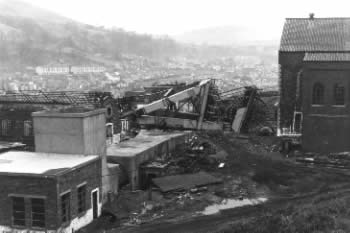
D. R. Davies arrived in London with great hopes. He had become notorious at Southport, where he had, in his eyes, suffered for Socialism. His inetntion was to become a freelance journalist and bring his wife down as soon as he could. A meeting with miners' leader A. J. Cook (pictured) secured letters of introduction to a number of Labour politicians. Yet all was to no avail. In a year, Davies made exactly six pounds and three shillings, half for an article on Sheep-dog trials, the other for an article on Suffragettes which never appeared in print. He was forced into stringent economy as he fell into poverty, a poverty for which he was not prepared:

"Like thousands of other ministers and clergy, I had glibly uttered the second-hand truths and consolations of religion. But now I learnt what no college or university could possibly have taught me: that in religion second-hand truth is futile."

He was forced to sell his library in order to survive. By this time, Davies no longer went anywhere near a church, and spent much of his time as a shiftless unemployed scholar, visiting the British Library whenever he could (much like Karl Marx). So ashamed was he that he steered clear of Congregationalists, despite their later assertions that they would have helped him.

A visit to Lewis Phillips, a friend of his wife, saw Davies moving to Enfield, where he landed a job addressing envelopes for a breakfast cereal company. Phillips, a Christian, paid for Davies' wife, Edith to join him, and she, too, took up the work of addressing envelopes. By now, Davies was forty years old, and seemed to have no future. Only an interest in music kept Davies from despair.

Indeed, this interest landed Davies a job as freelance lecturer on music for the HMV Record Company.

At this time, D. R. Davies had a meeting that would change his life forever. Attending a meeting at 55 Gower Street, Bloomsbury, Davies gave a speech that impressed a man called Dimitri Mitrinovic, the leader of a political movement called 'New Britain,' dedicated to the concept of a politically united Europe. A Serb by birth, Mitrinovic called Davies 'the man I've been seeking for the last fourteen years.'

With this step into a political movement stressing human effort, co-operation and organisation, Davies seemed to have turned his back completely on Christianity.

Labels:

Saturday, February 03, 2007

D. R. Davies XIII: The General Strike

Himself a former miner, Davies instinctively sympathised with the miners. He had shared their lot, and felt that the owners' attempts to cut costs by cutting wages and hours. Accordingly, his response to the General Strike was highly simplistic:

"I was overwhelmingly certain that the church ought to support the miners in their struggle, through thick and thin. As I put it, in the first sermon I preached on the issue, "The miners are altogether right and the owners are altogether wrong." Prior to the sermon, entitled 'Christianity and the Workers' Claim,' the senior Deacon of the church met with the pastor:

"He begged me not to preach on the Strike because, he said, he knew that it would make for trouble and divide the church. People were already saying that I wasn't preaching the Gospel. If I took the line I proposed, it would give them just the handle they needed."

Despite understanding the danger he faced, D. R. Davies refused to listen to the advice of a man he considered to be a friend. When he found that his support for the General Strike increased his congregation manifold, Davies, by his own admission, was intoxicated by the attention. Despite the advice of the church secretary that the crowds could not last, Davies began to preach Socialism aggressively, maintaining that Christ's Gospel was a message of socialism. He ignored the protests of his members and concentrated entirely upon the Trade Unionists who flocked to the church.

"I became the slave of the social gospel. No preacher ever trimmed his sails to the prejudices of the wealthy membership more than I trimmed my sails to the new socialist incursion to my church. [...] I preached exactly what my new congregation wanted and expected. I expressed in the pulpit what they themselves believed and desired. I preached party politics - Labour party politics - in a religious guise. [...] between November 1926 and April 1928, when I resigned, my preaching dealt only with social and political issues - from the socialist angle."
Davies was popular, but it was not on account of the Gospel. As he admitted later: 'One teaspoonful of the genuine New Testament Gospel would have sent them packing.'

Davies began to tour Lancashire, speaking to miners' rallies. He was elected to the council, even standing for Parliament. Hawkshead Street church became a 'labour' church, new officers being appointed from the socialists for 1927. The church filled with unregenerate men. The quarrels of the Labour Party split the new membrship, while the old membership opposed the direction taken by their minister. In 1928, Davies resigned from the church and headed for London, expecting to take up a career in journalism. As far as he was concerned, he was finished with the church. Looking back, Davies had nothing but kind words for the men who forced him out:
"One thing I ave come to understand about this period in my development: that the opposition of "the old guard" in my church was giving expression to the deep and precious feeling that the Gospel was being perverted. Much of this opposition was bitter, petty and visionless, because the people who opposed were human, very human. But in spite of that, it was intuitively right. Those good, narrow-minded, conventional Congregationalists scented a deep heresy in my preaching and activity; they became aware that something infinitely vital was being jettisoned. Under the circumastances, they were utterly right in bringing about my resignation. It was a service to the church and to the Gospel."

Labels:

Saturday, January 27, 2007

D. R. Davies XII: The Bed of Sickness

As we have seen, D. R. Davies' ministry in Southport had been somewhat successful, if very liberal. He had retained his socialist, humanistic ideas, and applied them to the Bible. The result was a reasonably successful ministry, with numbers increasing. But God was soon to show that He was sovereign over the liberal minister.
Shortly before the commencement of the winter 1924 session of meetings, Davies was struck down by an attack of something akin to rheumatism. He was unable to preach for almost three months, and when he did re-enter the pulpit, he could only walk slowly, with the aid of a stick.
It took two years before Davies could resume his pastoral duties. Two years of treatments that caused him to become more and more isolated from the church at Southport, as he had from the church at Ravensthorpe. Again, D. R. Davies retreated into a private world of books.
It was at this time that an even occured that was, ultimately, to lead to the end of Davies' minsitry at Southport. Indeed, to the end of his ministry as a liberal. He was approached by a young man from a local engineering works, who wished to be married by Davies because he had heard the pastor of Hawkshead Street described as 'a bit of a Bolshie.' By 1926, Davies was holding meetings for Trade Unionists at Hawkshead Street Chapel, much to the disquiet of his deacons.
While many men from the Vulcan Engineering Works came to the chapel, the result of the Tuesday meetings was that Davies' preaching became more stridently political. Then, on 1 May 1926, the dreaded event happened: the miners of Great Britain, in dispute with their employer over wages and hours, were locked out by the mine-owners. Since the Trades Union Congress had promised that any lock-out of the miners would be answered with a strike of all unionised workers. The General Strike had begun.

Labels:

Saturday, January 06, 2007

D. R. Davies XI: Southport

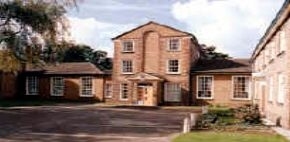
David Richard Davies' next Pastorate was at Hawkeshhead Street Church, Southport; '...a pleasing little building in the Gothic style, with a seating capactity of just over 400.' I had seen greater days, but there were very few churches in the 1920s of whom that could not be said. For this was the era in which the 'hearers' dropped away. There were one hundred members on the books at Hawkeshead Street Congregational Church, but the morning service averaged only thirty to forty. The evening meeting was in a healthier state, averaging eighty to a hundred. The Young People's Fellowship, held during the winter months, comprised between twenty-five and thirty, while the Sunday School; 'as is the rule in seaside towns [...] was less than the church membership." There was a single mid-week fellowship meeting and a Sunday afternoon Bible class. The church was, like that at Laodicea, neither not nor cold. Given the state of their new minister's heart, it could not be expected that he would improve matters.

But, while it is not possible to warm men's hearts by human actions alone, it is possible to create excitement, and by that excitement to move men's bodies. And D. R. Davies had determined to concentrate on the business of the church. He was to be the minister he had never been at Ravensthorpe. He began to read philosophy and theology properly. He also began to read contemporary literature, in order to be 'up-to-date.' While there were some complaints from older members of the congregation that their new minister's preaching was a bit 'Socialistic,' on the whole his ministry was accepted without murmur.

Davies also altered the mid-week meeting, which; '... was a miniature Sunday service, except that it was held in the schoolroom, and that one of the deacons used to take the prayer.' Davies changed the format into that of a popular lecture, his first series being "Prophets Ancient and Modern." This series was to start with Amos and end with George Bernard Shaw. The reader may draw their own conclusions from this. The series featured, among others, Paul, Augustine, Dante, Savonarola, Luther and St. Francis of Assisi; the modern prophets including Marx, the Welsh Atheist and Socialist Robert Owen, former Labour Party leader Keir Hardie, Dostoievsky, and the poet Francis Thompson. It was, as Davies later admitted 'a mixed lot.' He printed a syllabus and visited most of the congregation to encourage them to attend.

And it worked. Davies' enthusiasm and knowledge, coupled with his talents as a speaker pushed the attendance up from under fifteen to between sixty and seventy; something which added also to the sunday evening service. The little schoolroom was filled, a large number of young people being drawn in. In response to this, Davies: '...copied a practice of the famous Dr. R. F. Horton of Hampstead. On the last evening of each month, I delivered what I called a Monthly Lecture on a subject of topical interest.'
These things attracted the people Davies was looking to attract. While we may disagree with his choice of 'prophets,' it is not necessarily wrong to have a series of lectures which touch on historical as well as Biblicl themes. Nor is it wrong for a minister to deliver a talk on some topical matter, so long as he does not use the main Sunday meetings to do it. The problem with Davies was that the subjects in question showed a commitment to Socialism that ran far deeper than his commitment to Jesus Christ, a commitment that would be brought out by the turn of events just around the cormer. But before that, Davies was to be brought low. Just as he was about to start on his second series of mid-week lectures, "The Search for Eternal Life," when he was struck down with rheumatism. Davies spent most of the summer of 1925 on his back.

But far worse trouble was waiting round the corner.

Labels:

Tuesday, December 19, 2006

D. R. Davies X: At War in Peacetime

The end of the war saw D. R. Davies minister of Ravensthorpe Congregational Church. Looking back on this pastorate towards the end of his life, Davies described the young minister he then was:
"I started upon my ministry with a varied assortment of goods in my bag, but amonst them the one essential, fundamental thing was lacking - an experimental knowledge of God as Judge and Redeemer. I had a keen and passionate interest in political and social problems, and a fair knowledge of them [....] I had but little more than an elementary smattering of theology in its various branches, and certainly no scholarship."

Despite the war, he remained confident of humanity, preaching 'a human gospel', as he would later recall. Yet that gospel was also a lazy gospel. Davies did not prepare until the last minute, and employed printed notes for his children's talks (the bane of many a pastor). Even so, he preached politocs from the pulpit, causing offence to many in his congregation, particularly at peacetime. He attacked the rich and praised the working man:

"My one aim was to get society right. If we could abolish war and poverty, I thought, people would automatically become happy and virtuous. I realize only too well how "the hungry sheep looked up and were not fed". I gave them ideas, but no Gospel. How could I give Good News when I myself had ne living experience of Redemption?"

Hating pastoral visitation, the young man became very isolated. He became isolated in an intellectual world all his own, coming to depend on a circle of friends outside the church, the focus of this being the Dewsbury poetry society. This allowed Davies, always sure of his own intellect, to become convinced that he possessed 'the artistic temperament,' along with his involvement in the local art circle.

"I began to breathe the atmosphere in whih Biblical Christianity was irrelevant. Curiously enough, this fortified me in my Modernism, in the belief that to appeal to the world of today the Church would have to undergo a dramamtic theological overturn. What I failed to realise was that religion of any sort had become irrelevant to the modern mind. Without knowing it, I had begun to develop in myself the mentality to which Christianity would no longer be necessary."

But this would take several more years. Before then, Davies left Raventhorpe, preaching his last sermon there at the end of September, 1922. He would move to Hawkeshead Street Congregational Church, Southport, there to enjoy a hectic, troubled ministry, years of sunshine and storms. We shall consider that next time.

Labels:

Thursday, December 07, 2006

D. R. Davies IX: Wartime

The coming of war in 1914 was a greater crisis for British nonconformity than she had faced for a long time. Having achieved political ascendancy through the Liberal Party (in government since 1905), nonconformity had thought it had only green pastures before it. But the outbreak of war caused a disastrous split in political nonconformity.

The Liberal Party was formally committed to peace, yet was forced to war. Many Nonconformist Ministers swung behind the war, but others opposed it,as they had opposed the Boer War at the turn of the century. Dr. Griffith-Jones, the principal of United College, Bradford, was among those who threw themselves into supporting the war effort, as did Dr. Duff, whose lectures became anti-German rants. Davies himself reacted the other way, becoming a fanatical pacifist to the extent of offending many in his congregation at Horton Bank Top church.

Later, Davies was to describe the effect the war had on the comfortable, humanistic, politicised nonconformity of the pre-war years:

"The First World War caught Liberal Christianity unawares. It was an even for which it was totally unprepared. It administered a nasty jar to its whole scheme and outlook. It broke in on it like a gangster in a drawing-room full of old maids sipping their afternoon tea. It took the lid off that human nature of supposed fundamental goodness, and there emerged something which couldn't be squared with the roseate dream of an inevitable progress into perfection. Something had gone wrong somewhere!"

But it was only later, looking back, that Davies realised this had begun to undermine his liberalism. At the time, Davies threw himself enthusiastically into anti-war campaigning, supporting Woodrow Wilson's campaign for a 'just peace,' only to be disillusioned by the popular response to the Peace treaties.

By this time, Davies was pastor at Ravensthorpe, where he was to stay until October 1922, a liberal minister concerned to bring in the kingdom of God by political means. Next time, God willing, I intend to describe those early days in the minstry.

Labels:

Wednesday, December 06, 2006

D. R. Davies VIII: Back to College

In October of 1912, Davies began a course at United College, Bradford, preparing for the Edinburgh University entrance examinations, with a view to entering the Congregational Ministry. His intention was to take the College's Arts course. As at Manchester, he found the course dull, but he had the warning of Manchester, and stuck the course.

Even so, there was friction. Davies admitted to a settled dislike of Hebrew, Old Testament and other subjects, based on his dislike of the tutor, Dr. Archibald Duff. His first Hebrew exam netted him exactly no marks, a result serious enough to lose Davies £10 of his scholarship and the threat of dismissal unless he achieved over sixty percent in his next exam. Even so, he only did the minimum in the areas taught by Professor Duff, with the result that he was dangerously ignorant in important areas.

He went to Edinburgh, only to have his course cut short by a nervous breakdown, caused by long hours of work, frequent preaching engagements, and the need to work underground during vacations.

After consultation with the Principal, it was decided that Davies would follow the theological course, based in Bradford. In preparation for this, he was appointed student pastor at Horton Bank Top Congregational Church, just outside Bradford. There he could exercise a settled ministry and continue his studies in settled peace.

It was the summer of 1914, and soon everything was to change. The war was to break in on the easy theological liberalism that D. R. Davies had picked up in his two years at Bradford.

And that is such a serious topic that it must wait until the next time, God willing.

Labels:

Saturday, November 25, 2006

D. R. Davies VII: The Way of The Prodigal

D. R. Davies returned from Manchester with an acute sense of failure. He had come to regard himself as brilliant and sensitive, a young man of culture, better than his fellows. To be once more working underground, therefore, was a mortifying shame. Later, Davies was to use this to make a point about the ability of education to improve a man's morals:

"It is important to note that education had made no fundamental difference to me, except to intensify my egotism and inflate my pride. Its net effect was to isolate me from my fellows. My increased knowledge, wider interests, deeper culture resulted in my becoming a greater, more miserable sinner."

Davies came to see in his failure, not the foolishness of his embarking on a course of action he was not able to follow through, but the oppression of the capitalist system. In other words, his socialism had become a way of avoiding responsibility for his actions.

From 1907 to 1912, Davies worked as a miner. He became active in Trade Union politics, as well as the Independent Labour Party. By 1909, he had become a member of his local Trade Union executive, and was soon speaking from ILP platforms. At first, he avoided church, still guilty about his lapse into Unitarianism. However, in time he returned to the church, and began preaching again. A member of the library Committee of the Miners' Institutes at Maesteg, he was able to continue his reading.

Eye-trouble caused by coal-dust forced Davies to take a job on the surface, a loss of status. He was on a gang loading timber for pit-props, under the direction of a tyrannical foreman. Singled out for his education and socialism, Davies came to hate him. After an incident at the pit-head, he nursed a grudge against the foreman, swearing that he would 'do' him.

And, when his father recovered enough to start working again, that is exactly what Davies did. He quit work, and, that very day, ambushed the foreman and gave him such a beating that it was a long time before he could return to his duties. And Davies left home.

He became a stoker on a steamer for New York, but this was more than he could bear. He returned to Liverpool, louse-ridden and feeling thoroughly sorry for himself. At a Church Army Home in Birkenhead, he was cleaned up, and after this he became a tramp, walking through the English countryside, doing odd jobs and sleeping in the 'casual wards' of workhouses.

After some time he 'came to himself.' He realised just how bad the lifestyle of the tramp was for him, and wrote to his mother asking her to send five shillings to the Post Office, Cardiff. When he arrived, it was there. Davies spent most of the money, and had to walk to Bridgend, arriving just in time for the last train to Maesteg. There, he found his father asleep, but his mother was still awake, waiting for him:

"She had a hot bath ready, and a supper of my favourite dish, tea, bread and butter and kidney beans. Then she talked to me. That was typical: she saw to my physical needs first, then addressed herself to my soul. I shall never forget her words: "don't you see, my boy, that the way of the sinner is hard?" So gentle, so cncomplaining, so full of mercy and compassion."

Davies returned to the mine, despite his attack on the foreman (who may well have decided that he'd deserved it), and returned to the chapel. Soon, he was once more feeling drawn to the ministry. In time, he was accepted as a candidate for the Congregation ministry by Bradford United College. Given a job as night-watchman, Davies was able to study for the entrance examination. In 1912, he began to train for the Congregationalist Ministry.

Labels:

Friday, November 24, 2006

D. R. Davies VI: Drop-Out

The Unitarian College at Manchester, then housed in Summerville College, Manchester (current building depicted) at which D. R. Davies arrived was affilliated to the University of Manchester, and it was the University matriculation that he was to take. This was a bad thing, for it led to Davies becoming isolated from his fellow students. According to his later account of his studies, only his room-mate, Douglas Hoole, showed any interest in him:

"After the excitement of the first few weeks, I began to feel a stranger in the place: I simply slept and boarded there. I attended all my lectures at the University. Once a week I had to attend a sermon-class, when each student in turn had to preach a sermon for criticism. That was the only educational contact I had with the college itself. There was a very marked and definite prejudice against Welshmen [and Davies, remember, had Welsh as a first language], which I felt keenly; it conspired to make me feel an alien, and drove me to find my interests outside. That would have happened anyhow, but the environment certainly encouraged that."

The only University classes were less than gripping for the young would-be minister. Only Greek, taught by Professor Burroughs, interested Davies. Apart form that, he found the course deadly dull, even British history, which was taught by one Hilda Oakeley. Davies began to skip classes, and soon barely attended at all.

After a chance encounter with British statesman John Morley, Davies devoured the man's works, starting with his On Compromise. A pupil of the philosopher John Stuart Mill, 'like his master [...] he loved humanity in the abstract, but had little eye for the concrete specimen." In spite of this, the meeting with the man sparked off what was to be life-long interst in politics and political philosophy, as well as a belief in individual freedom. He became a radical in his politics.

He also discovered the theatre. In time, Davies became intesely interested in plays with a social message, such as the works of Galsworthy and George Bernard Shaw. This served as a gateway to the discovery of other contemporary authors, most notably H. G. Wells, through whose influence, Davies became a socialist:

"I lost both head and heart to Wells. I not only read, I also bought each new book by him, which kept me busy and short of money. He was my guide and philosopher. I raved about him. Yet of all my early gods, he is the one of whom time and experience have made the greatest scarecrow. Today I think Wells merely tawdry, shallow and shabby, with his quack nostrums of World Brain, New declaration of Human Rights, and so on. But in those Manchester days, my youthful,eager mind clothed him in royal purple."


Sunday evenings became a time for politics, worshipping at the altar of socialism, through such high priests as Keir Hardie, Phillip Snowden and J. Ramsay Macdonald. This came to be his religion, Socialism meaning far more to Davies than Unitarianism, although he was a student for the Unitarian ministry. Indeed, by June of 1907, Davies had become deeply hostile to religion in all its forms. He was also under-performing in his studies, due to the fact that he despised them as well. Indeed, only his fear of returning to Maesteg kept him from resigning from the college. Like many before and since, he liked being a student, although he hated the work.

At the start of the summer term, however, Davies found himsel in the Principal's office, being asked to explain his appalling results. After he made a clean breast of his rejection of religion, the Principal gave him a term in which to make up his mind, and, if he felt no different, Davies was to resign.

In the end, God took a hand. Davies' father was taken seriously ill, and D. R. found himself forced to return to coal-mining in Maesteg. He had come to hate coal-mining, for the only practical effect of his time at college had been that D. R. Davies had come to consider himself a cut above his fellows. His next field of labour would be politics, not religion.

Labels: